Showing posts with label Barbara Clinton. Show all posts

Wednesday, July 15, 2015

Mae West's Booty


NOT long after Salvador Dali created the Mae West lips sofa in 1963, I experienced something of what it might feel like to be lost in such decadent plushness. I was four and probably knew as much about Dali as did the manufacturers of the Morris Minor that offered up this early cultural experience. No doubt those car assembly workers in Birmingham and Cowley, Oxfordshire, were better acquainted with Ms West than I, though, I have to say, that Morris Minor could shake its perfectly formed booty as well as any silver screen goddess.

The Morris Minor. Image may be subject to copyright
Maybe it was a mark of good attachment, or the opposite, but I was not remotely perturbed to be sent off to school for the first time in the company of two women I had never met before and both of whom, especially the younger, wore stern-looking spectacles. We pupils ran through that school on a kind of slowed-down conveyer belt from infancy to sixth, and the old school building eventually surrendered to the superior charms of the low-slung 1960s model to where we all decamped within months of my arrival. But these two teachers, who then constituted the entire staff, remained constant for the duration of primary education.

They arrived to pick me up on a September morning in that shiny black Morris Minor with its silver trim and blood red interior upholstery. After some delay Miss Cox (aka Mrs Carre) executed the necessary manoeuvre to cause the back of her front passenger seat to collapse forward, making enough room for me to slip into the rear interior. In an effort to avoid being swallowed up by the scarlet maw of the backseat, which sloped away as a mouth towards a gullet, and to become familiar with my new surroundings, I perched on the edge of that seat like some round-the-world yachtswoman teetering on the edge of oblivion. Through the tunnel of space between the two front seats and two wise, permed heads, I watched the crooked, bumpy road unfurl beyond the windscreen as I journeyed into formal education.

That first day at school was unremarkable aside from the little black metal hen who, when you pressed on her back, laid a little wooden yellow egg, and the minor drama of getting a paper clip stuck in the gap between my two front teeth. At the home bell, I duly packed up my new copybook and pencil in my new school bag, collected my coat from the lower rungs of the communal rail in the entrance hall and stood by the car, which had spent the day parked on the roadside, outside the high school wall.

Miss Cox, was first to come along. She repeated the morning manoeuvres to readmit me to the cavern of the back seat, before sitting into the car in front of me. We were all present and ready to go except for the driver, Mrs McMahon. I don’t remember what, if anything Miss Cox and I talked about but eventually it seemed to me that we should be on our way.

Miss Cox turned from an examination of her nails to look at me through the driver rear-view mirror, which she had already turned away from its correct position, which probably didn’t matter too much in 1964 on a quiet country road in north Leitrim at three o’clock in the afternoon. I had moved again to the perch position, the better to see the arrival of Mrs McMahon, but could feel the happy anticipation of getting home ebb away as the wait went on.

Red interior of the Morris Minor. Image may be
subject to copyright.
 Up to that point my life had been successfully governed by a general rule that even when not in sight significant adults should be easy to account for. I imagined Mrs McMahon undertaking some ritual of rounds, such as checking that the guard was in place before the dying embers of the fire and that no children had been forgotten in the school’s outdoor, long-drop toilets.

Without a watch or much sense of time, all I could see was that all the other pupils had long since disappeared on foot or bicycle. It felt strangely eerie to find myself going nowhere in the back of the car with nothing to say to my company, while my siblings bore down on dinnertime.

Miss Cox again broke into my reverie telling me she didn’t understand what had become of Mrs McMahon and that she thought we would have to leave without her. She was still looking at me through the rear-view mirror and I’m not sure my face registered the significant shock her announcement had caused me. I wanted to say: “Are you crazy. We cannot leave without her” because it was a strict rule that no matter how trying a sibling or cousin, it was not permitted to return from an outing missing any member of the party.

I could not imagine what my mother would say were she to see me disembark from Mrs McMahon’s car with Miss Cox occupying the pivotal driver’s position. That concern immediately gave way to the next one. Could Miss Cox even drive? I didn’t think so and I certainly had not been delivered to the care of this Morris Minor to be transported by someone whose essential credentials were far from established. But I’d also learned even at that early stage that one must sometimes surrender to the dubious management of adults.

But more than anything I was horrified at the idea of being left behind, and to be the one leaving another behind did nothing to comfort me. Horrified that Mrs McMahon would be afraid, alone in the dark of the school. I did not want her to be afraid and I did not want her to be hungry, as I already was, or cold. I hated being cold.

Miss Cox began moving as though to get into the driver’s seat bringing me heavily back to the present. I could hardly forbid her from doing something I knew she should not do, and doubted she was able to do. In another age, about two decades away, the car would have been locked and the ignition key safely in the missing Mrs McMahon’s handbag but on that day not only was the car open but the key sat in the ignition all day.

In the absence of any reasonable alternative, I felt the first inclination of the day to cry, but before the chasm of disaster could open to devour me, the rusty school gate creaked into life. Mrs McMahon was before us, handbag slung over her arm, coat buttoned to the throat, a far away look on her face as though we were none of her concern. While I half-hoped Miss Cox would tell her off for keeping us waiting and worrying us, my sense of relief outweighed all else and I allowed myself to bask in the comforting warmth of Mae West’s smile for the journey home to my mother.

The Mae West lips sofa. Image may be subject
to copyright 
For my first teachers, who gave me a lifelong love of reading and writing.

Barbara Clinton 2015 ©

Wednesday, November 12, 2014

History of The Rain review

Story flows with the power of a river in flood


History of the Rain by Niall Williams
Bloomsbury, €17.90 [Imagine may be
subject to copyright]
NIALL Williams' History of the Rain flows like the river that is one of its central characters, on a current of movement that is by turn poetic, tragic and funny.

There are many constants in this Man Booker-listed novel - among them water, grief, books and humour. But at its heart this is a story of love and loss for one family in the small, fondly described community they inhabit on an edge of a world that is Ireland, and maybe hope.


Ruth Swain passes her days in an attic bedroom of her Faha home in County Clare.


Across the road from her home, the River Shannon wades inexorably towards the ocean, itself a presence, by turn inspirational and ominous. Within this narrow hinterland, cut off by river and rain, is a universe of books, enumerated librarian fashion by Ruth, and characters that any storyteller would be proud to chronicle.

There's Nan, who stockpiles Clare Champion newspapers. With the arrival of each new weekly edition to her collection, she likes to go "straight to Deaths and Planning, which is basically a super condensed version of life's plot, 'Johnny Flanagan's building' and 'Johnny Flanagan's dead' only breaths apart".

And there is, of course, Virgil Swain, Ruth's father, himself one of a longish line of Swain men - from Wiltshire in England to the west coast of Clare.
Niall Williams [image may be
subject to copyright]

These Swain men have all inherited the Impossible Standard, which not surprisingly none manages to meet.

Virgil is a poet who, through a series of fortuitous or unfortunate events, washes up in the life of local Faha girl Mary MacCarroll.
And his poetry slowly and quietly makes its way into the blood stream of his family and his daughter.

The poetic also infiltrates the language and expression in this novel, which borrows its title from a collection of unpublished Virgil Swain poems.

Ruth is writing about her father and hoping, in this rendition of his life, to bring him to the public his poetry failed to reach.

Though the nature of her illness is not entirely clear, Ruth is very unwell.


More wisecracking than sage, she is also grieving, and we discover grief, too, is multi-layered and generational.
The sheer fondness of Ruth for her father, in particular, lends itself to some beautiful, and wry, observations, including one of herself as a baby, afraid to sleep, lying in her father's lap while he sat at his desk and wrote poetry; she "small as a sonnet, and just as difficult", and later awaking back in her cot and feeling "well, composed".

Williams' capacity to give life to what is between the pages of the thousands of books in Ruth's room, and to interweave the pronouncements of many great writers with the every day of west Clare is part of what makes this novel so enjoyable.

Sure, there are moments of sentimentality but these fail to staunch the great current on which History of the Rain carries the reader to the conclusion that finally, and only possibly, the incessant rainfall and all that came with it, might stop.


First published in the Sunday Independent on October 6, 2014 (www.independent.ie) 

Barbara Clinton 2014


Tuesday, August 19, 2014

Away Day

WE DRIFTED then, you and me. Moving apart all the time. Like kids on an airbed, floating, eyes closed, to discover too late we’d drifted too far. The sun was sinking, the water grey, the certainty of solid ground out of reach. We'd set off together for faraway horizons in that summer of optimism. 

We held hands and stayed close for a time, and if asked when that changed I couldn’t have said. Hands empty and cold, I turned my head and barely made out a shape on the water that could have been you – or somebody else. Maybe that was you on the shore, a matchstick moving away, back up the beach, headed for shelter? 

Bray seafront (Image may be subject to copyright)
But we were not children and never had days of careless, thoughtless floating – on water or anywhere else – except, maybe, that day when it rained so hard on the roof we could not hear the pennies drop 
in the metal trays of the 
one-armed bandits. We’d taken the Dart out to Bray, telling ourselves once we got there we’d do the coast walk to Greystones. 

But we never made it off the promenade, trawling instead between the amusement arcade and the chipper. 

There a squared-off man with heavy hands silently counted the coins we spilled on the counter in exchange for fresh cod that was frozen and chips. Hunched on cold boulders, we wiped vinegar and grease from our chins with our hands, and silently looked out to Howth and the next bank of clouds rolling in. 

Image may be subject to copyright
Then you found a €20 note in your pocket and we went to the pub. Sat by a fire that wasn’t remotely incongruous in July and drank big pints of stout till the money was spent. And two bags of crisps with the last round.

We stole a ride home on the train, getting off twice when ticket inspectors got on. At Tara Street, as expected, the turnstiles were unguarded and open, so it all ended there, and we parted. 


Friday, August 15, 2014

Strawberry Squirrel


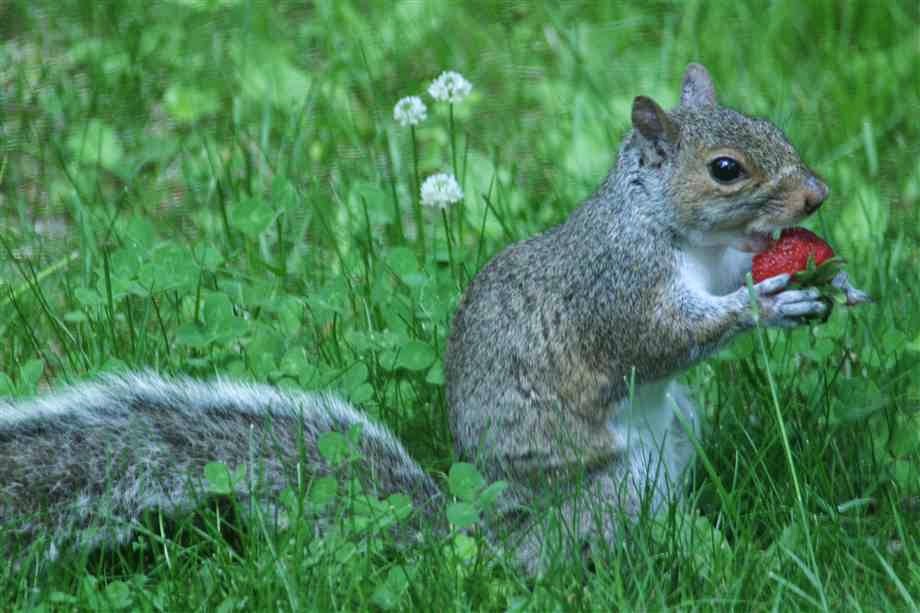
To escape the busy-sawing carpenter she went to the park to walk among the trees, and found herself eventually in the walled garden. She happened on a squirrel grazing in the strawberry patch, upright on his haunches and nibbling on a big red strawberry, held between his bony paws, like some Andy Warhol acorn.

Image may be subject to copyright
He looked straight ahead as intent and busy as the carpenter, but soundless. He was oblvious to the artichokes that towered above him and reminded her of southern hemisphere summers. 


Suddenly, he did a little mincing thing and cleared a row of radishes before disappearing into the lush jungle of salad leaves. She wondered if he dropped the fruit or somehow managed to take it with him .

By the flowers, a man came to stand beside and said, ‘I haven’t been here for years, the last time it was all overgrown’. For no reason, she wondered whether he’d been in prison. 

Nothing more than he was wiry, pale and wore blue jeans and a blue shirt; and maybe because they were both, just then, held within the confines of these walls – though all the barred metal gates were open. She thought, It’s a long time since it’s been overgrown though I too remember then.’

Image may be subject to copyright
 That was before the boom that destroyed everything, she thought but didn’t say. He probably wouldn’t go for that, might say, ‘like the boom was a personality and could destroy anything’. He did say, ‘I think they have a team of people who work here all the time. They do a good job.’

She knew he was right and replied, ‘At least somebody is getting something right in this country.’ She’d been practising keeping up a conversation with strangers – just to be a bit more friendly – but he let that go and she didn’t feel she should push it.

She walked a while longer and found herself leaving by the same gate as he. He smiled at her but once outside they went their separate ways without sharing any further  – she back towards the city and the man in the opposite direction, westward.

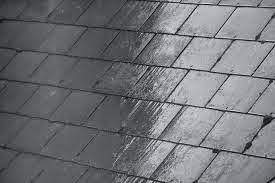
Two weeks later she was shocked to encounter her ‘friend’ from the garden again. This time he was slooping along the slick slates on a row of terraced cottages oppossite hers. A thunder storm was raging and his hair was sleek and wet. Trapped inside her car till the rain let up, she thought not ‘what the hell is he doing there’ but ‘be careful, your feet won’t hold, stop, get down, go back’.

The rain sluiced over his slight frame and he seemed to flinch at each thunder clap, though the storm was moving west and easing. He somehow managed to gain the ridge tiles and find himself a foothold there. He held steady for a moment and then crept along till he reached the red-brick chimney stack. He hesitated, as though contemplating and resting at the same time, then climbed up there and found the chimney pot; looked in and down.

Image may be subject to copyright
 She said, ‘No don’t do that, it’s dangerous.’ But silently, to herself, and anyway he could not have heard or understood. His head came clear and he looked about as though unsure of his options.

He sniffed the air in the manner of a squirrel, then dipped his head back in again. So lost was she in watching him she didn’t notice the rain had stopped. She went indoors and left him to his fate, alone in alien territory, and a long way from the safety of his walled-in strawberry patch. 
Barbara Clinton 2013©